How to Choose the Right Stereo Audio Cable for Your Audio Needs
When it comes to enhancing your audio experience, selecting the right stereo audio cable can make a significant difference. According to renowned audio engineer Dr. Emily Harris, “A quality stereo audio cable is essential for transmitting sound accurately and ensuring that the listener enjoys the full spectrum of audio fidelity.” Understanding the nuances of stereo audio cables is crucial for both casual listeners and audiophiles alike, as it can dramatically influence sound clarity and performance.
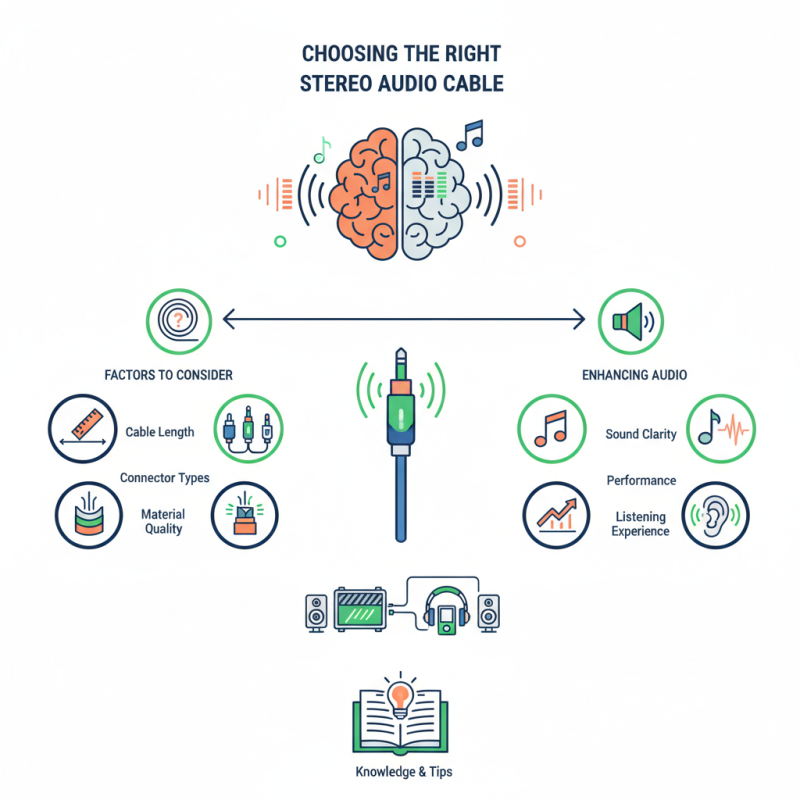
In the vast market of audio equipment, the variety of stereo audio cables available can be overwhelming. Factors such as cable length, connector types, and material quality play vital roles in determining which cable is most suited for your specific audio setup. Whether you are connecting speakers, amplifiers, or other audio devices, choosing the right stereo audio cable allows you to achieve the best sound reproduction tailored to your listening preferences.
As we delve into the process of selecting the ideal stereo audio cable, we will explore key considerations, expert recommendations, and practical tips to help you make an informed decision. With the right knowledge, you can elevate your audio experience and ensure that every note and beat resonates as intended.
Understanding Different Types of Stereo Audio Cables Available in the Market
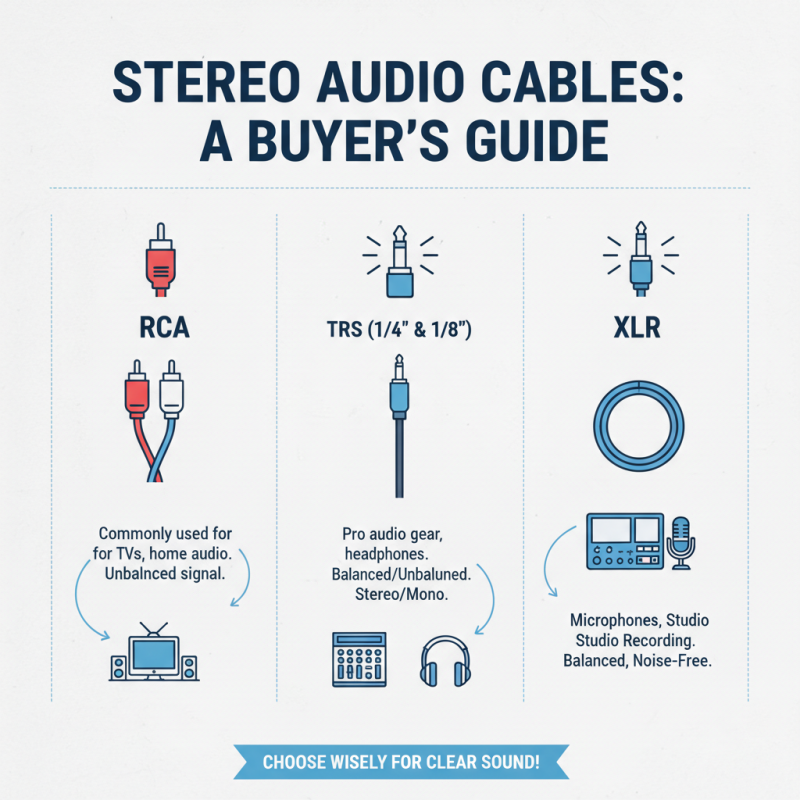
When it comes to selecting the right stereo audio cable, understanding the various types available in the market is essential. There are a few commonly used cables: RCA, TRS, and XLR. RCA cables are typically used for connecting audio devices to televisions, while TRS cables are popular in professional audio equipment for their ability to carry balanced audio signals. XLR cables excel in providing a noise-free connection, making them the standard choice for microphones and studio recordings.
Tip: Always consider cable length. Long cables can pick up interference, so if you need a lengthy run, opt for a high-quality shielded cable. Also, pay attention to the connectors; gold-plated connectors offer better conductivity and resist corrosion, ensuring longevity.
Another important aspect is the cable construction itself. Some cables are designed for flexibility and portability, while others are built for durability and can withstand heavy usage in studio settings. Look for cables with sturdy jackets and strain relief to prevent breakage at the connectors.
Tip: When in doubt, prioritize quality over price. Investing in a reliable cable can significantly enhance audio performance and save on future replacement costs, ultimately providing you with a clearer and more enjoyable listening experience.
Evaluating Cable Materials: Copper vs. Fiber Optic for Sound Quality
When considering audio cables, two primary materials dominate the conversation: copper and fiber optic. Copper cables, widely acknowledged for their excellent conductivity, often deliver warm and rich sound qualities. According to a report by the Audio Engineering Society, copper's low resistivity ensures minimal signal loss, preserving the integrity of the audio being transmitted. This can make a notable difference in setups such as home theaters or high-fidelity stereo systems, where sound quality is paramount.
On the other hand, fiber optic cables utilize light to transmit audio signals, effectively eliminating electrical interference that can affect sound clarity. A study by the International Society of Audio Professionals highlighted that fiber optic cables can achieve a higher bandwidth, which is beneficial for transmitting digital audio formats that require more data, such as high-resolution audio. While fiber optic systems are typically more expensive, their benefits in reducing signal degradation may meritoriously justify the investment for audiophiles or professional settings.
**Tips:** When choosing between copper and fiber optic cables, consider your audio environment. If you’re working with a high interference area, such as proximity to power lines or Wi-Fi routers, fiber optic may be the better option. Additionally, for classic analog setups where warmth and richness matter, copper remains the tried and true favorite. Always ensure that the connectors are compatible with your devices to optimize performance.
Length Considerations: How Cable Length Affects Signal Integrity
When choosing a stereo audio cable, one of the critical factors to consider is the length of the cable, as it can significantly influence signal integrity. According to industry studies, longer cables can introduce potential issues like signal loss and interference, particularly in analog audio systems. The electrical resistance of the cable can increase with length, resulting in attenuation. In a report by the Audio Engineering Society, it was noted that using an unbalanced cable longer than 25 feet could lead to noticeable audio degradation, especially when dealing with low-level signals.
Moreover, the impact of cable length varies depending on the type of audio signal. For digital signals, such as those transmitted via optical or coaxial cables, the effect of length is less pronounced due to the nature of digital transmission, which is more resilient to length-related issues. However, even in these cases, exceeding manufacturer-recommended lengths can still lead to a decrease in performance, including increased jitter and potential data dropouts. According to a white paper from the Consumer Electronics Association, keeping cables as short as possible while still accommodating your setup is advisable to maintain optimal sound quality and minimize interference. Therefore, when selecting audio cables, it's crucial to carefully consider the length to ensure the best audio experience.
Identifying Connector Types: RCA, XLR, and 1/4" Jack Explained
When selecting the right stereo audio cable, understanding the different connector types is crucial for ensuring optimal sound quality and system compatibility. RCA connectors are widely used in consumer electronics, known for their color-coded plugs (red and white for audio) which facilitate easy connection to devices like televisions and stereos. According to a recent industry report, RCA cables offer decent audio quality suitable for casual listeners, but they are not recommended for professional audio work due to their susceptibility to interference.
In contrast, XLR connectors are the standard for professional audio applications. These cables provide a balanced connection, minimizing noise and delivering superior audio fidelity. A study from the Audio Engineering Society indicates that XLR cables are favored in live sound and studio settings due to their robust durability and ability to transmit longer cable runs without signal degradation. For those working in music production or live sound reinforcement, investing in XLR cables can significantly enhance audio performance.
Tip: Always check your equipment’s compatibility before purchasing cables. If you're using equipment that requires professional-grade audio, opt for XLR. Conversely, if your setup is casual, RCA cables may suffice. Additionally, consider cable length; longer cables can lead to greater signal loss, so choose the shortest length necessary for your setup to maintain audio integrity.
Matching Cable Specifications to Audio Equipment for Optimal Performance
When selecting a stereo audio cable, understanding how to match cable specifications to your audio equipment is crucial for achieving optimal performance. One of the primary factors to consider is the cable type, which varies greatly based on the intended use. For instance, unbalanced cables, such as RCA, are typically used for consumer audio setups, while balanced cables, like XLR or TRS, are preferred in professional environments due to their increased resistance to noise and interference. According to a recent industry report by the Consumer Technology Association, approximately 70% of audio professionals prefer balanced cable solutions to ensure pristine sound quality in live and studio settings.
Furthermore, the cable’s impedance and capacitance can significantly impact audio fidelity. For instance, a lower capacitance cable minimizes the high-frequency roll-off that can occur with longer runs, especially in setups exceeding 25 feet. A study published by the Institute of Electrical and Electronics Engineers (IEEE) highlighted that cables with a capacitance below 20 picofarads per foot maintain better frequency response, providing clearer highs and a more defined audio experience. Additionally, when pairing cables with specific audio equipment, it is essential to check the output impedance of your source device against the input impedance of your amplifier or speaker to prevent loading issues, which can lead to distorted sound quality. By taking these specifications into account, users can effectively harness the full potential of their audio gear.
How to Choose the Right Stereo Audio Cable for Your Audio Needs - Matching Cable Specifications to Audio Equipment for Optimal Performance
| Cable Type |
Connector Type |
Length (Feet) |
Suitable For |
Material |
Price Range (USD) |
| Stereo RCA Cable |
RCA |
6 |
Home Theater System |
Copper |
$10 - $25 |
| 1/4" TRS Cable |
1/4" TRS |
10 |
Guitar Amplifiers |
Oxygen-Free Copper |
$15 - $30 |
| XLR Cable |
XLR |
15 |
Microphones |
Shielded Copper |
$20 - $50 |
| 3.5mm Stereo Cable |
3.5mm |
3 |
Laptops / Smartphones |
Copper |
$5 - $15 |
| Optical Audio Cable |
TOSLINK |
10 |
Soundbars |
Plastic Fibers |
$15 - $35 |