How to Choose the Best Pendant Microphone for Your Needs
When it comes to achieving high-quality audio capture, the choice of a pendant microphone can be a crucial factor. Pendant microphones, known for their discreet and unobtrusive design, offer flexibility and versatility for various applications, including broadcasting, theater productions, and presentations. As the demand for clear and professional sound continues to rise, understanding how to select the best pendant microphone tailored to your specific needs becomes imperative.
Choosing the right pendant microphone involves analyzing key features such as sound quality, pick-up pattern, and comfort. Whether you require a microphone for live performances, lectures, or recordings, the characteristics of each model can significantly impact the final output. Furthermore, considerations like compatibility with existing equipment and the intended environment—be it a quiet studio or a noisy venue—play vital roles in making an informed decision. In this guide, we will explore the essential factors to consider when selecting a pendant microphone, ensuring you find the perfect match for your audio needs.
Understanding the Basics of Pendant Microphones
Pendant microphones are a versatile tool in audio capture, commonly used in environments such as conferences, presentations, and performances. Understanding the basics of these microphones is essential for selecting the right one for your specific needs. Typically, pendant microphones are suspended from a ceiling or worn around the neck, designed to capture sound efficiently while minimizing ambient noise. Their discreet design allows for unobtrusive use, making them a popular choice for professional settings.
When considering pendant microphones, it’s important to understand key characteristics such as polar patterns, sensitivity, and frequency response. The polar pattern determines the directionality of the microphone, influencing how it picks up sound from various angles. Omnidirectional microphones capture sound equally from all directions, making them ideal for capturing group discussions, while unidirectional models can focus on a single sound source, which is suitable for individual speaking scenarios. Additionally, sensitivity levels will dictate how well the microphone can pick up quiet sounds, while frequency response indicates the range of audio it can accurately reproduce, both of which are crucial for achieving clear and faithful sound capture in diverse environments.
Identifying Your Specific Sound Requirements
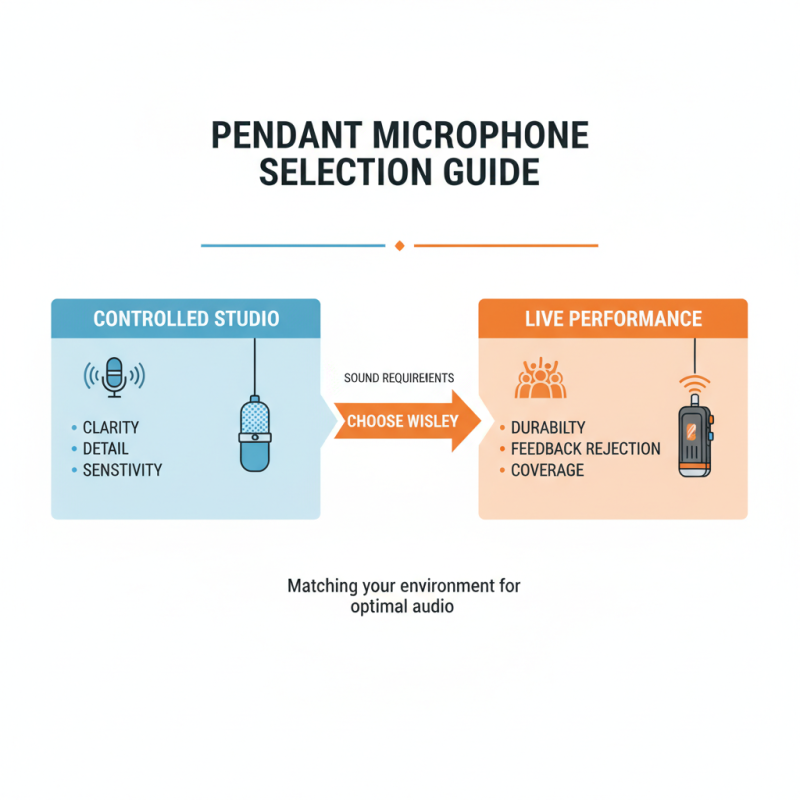
When selecting a pendant microphone, understanding your specific sound requirements is crucial. Different environments and applications demand various microphone characteristics. For instance, if you're working in a controlled studio setting, you might prioritize clarity and detail in the audio capture. Conversely, if you're in a live performance setup, durability and feedback rejection may take precedence.
**Tips:** Assess the acoustic characteristics of your recording environment. For untreated spaces, consider a microphone with good noise rejection features to minimize background noise. In contrast, if you have a soundproofed room, a more sensitive microphone can help capture the nuanced details of your voice or instruments.
Additionally, think about the type of sound source you will be using the microphone for. Vocal applications may benefit from a warmer sound profile, while instruments might require a more accurate frequency response. Conduct thorough testing to ensure the microphone aligns with your requirements, paying attention to how it interacts with your specific equipment and setup.
**Tips:** Try out different microphones with your gear before making a decision. Conduct a side-by-side comparison to see which one complements your sound best, ensuring your choice not only fits your needs but also enhances your overall audio quality.
Evaluating Key Features in Pendant Microphones
When choosing a pendant microphone, evaluating key features is essential to ensure it meets your specific recording needs. One of the foremost considerations is the microphone's pickup pattern. Most pendant microphones feature omnidirectional or unidirectional patterns. An omnidirectional microphone captures sound from all directions, making it ideal for group settings or scenarios where the speaker may move around. In contrast, a unidirectional microphone focuses on sound from a specific direction, which is preferable for isolating speech in noisy environments.
Another critical feature to consider is the frequency response of the pendant microphone. A wider frequency response means that the microphone can capture a broader range of sounds, which is particularly beneficial for nuanced audio applications. Additionally, the sensitivity rating of the microphone can influence how well it picks up quieter sounds. For voice applications, a microphone with a sensitivity rating that allows for clear capture of speech without excessive background noise is often preferred. Lastly, the construction and design of the microphone can affect its durability and comfort during use, which is particularly important for lengthy recordings or presentations. Ensuring that the microphone is lightweight and ergonomically designed can greatly enhance user experience and effectiveness.
How to Choose the Best Pendant Microphone for Your Needs - Evaluating Key Features in Pendant Microphones
| Feature |
Description |
Importance Level |
| Frequency Response |
The range of frequencies the microphone can pick up, typically in hertz (Hz). |
High |
| Directional Pattern |
Indicates how the microphone captures sound from different directions (e.g., omnidirectional, unidirectional). |
High |
| Sensitivity |
The microphone's ability to pick up quiet sounds, usually measured in dB. |
Medium |
| Connectivity |
Types of connections supported (e.g., USB, XLR), impacting compatibility with devices. |
High |
| Build Quality |
Durability and materials used in the microphone's construction. |
Medium |
| Price |
Cost of the microphone, which can vary widely between models. |
High |
| Weight |
How heavy the microphone is, which can affect portability and ease of use. |
Low |
| Battery Life |
Duration the microphone can operate on a single charge, relevant for wireless models. |
Medium |
Comparing Different Types and Brands of Pendant Microphones
When selecting the right pendant microphone, it's essential to understand the various types and their applications to find a suitable option for your specific needs. Pendant microphones generally fall into two main categories: condenser and dynamic microphones. According to industry research, condenser microphones are preferred for studio settings due to their sensitivity and wide frequency response, making them ideal for capturing vocals and nuanced sounds. In contrast, dynamic microphones are often chosen for live performances, as they are more robust and less susceptible to distortion from loud sound sources.
Additionally, the choice between different brands of pendant microphones can significantly affect audio quality and performance. A recent report from Audio Engineering Society indicates that variations in manufacturing quality and technology can lead to differences in sound reproduction, durability, and overall user experience. It is essential to review specifications and user feedback when comparing brands. For instance, some models may offer built-in DSP (Digital Signal Processing) capabilities that help eliminate background noise and enhance sound clarity, making them more suitable for environments with challenging acoustics. Ultimately, understanding the distinct features and performance metrics across various types and brands will aid in making an informed decision tailored to individual recording or performance situations.
Assessing Budget and Value for Money in Your Choice
When choosing a pendant microphone, it is crucial to assess not only the performance but also the investment you're making. According to a recent industry report by The Wireless Audio Report, the average budget for a quality pendant microphone ranges between $200 to $500, with the mid-range options providing a significant balance between quality and cost. This often means that spending just a little more can enhance sound clarity and durability, ultimately providing better value over time.
Tip: Always prioritize microphones that match your primary use—be it live performances, recording, or broadcasting. Evaluating features like frequency response, sensitivity, and build quality against your budget will help you determine which models offer the best return on investment.
It’s also important to consider additional costs associated with your microphone choice. For instance, the need for accessories such as mounts, windscreens, or cables can add up. A recent consumer survey indicated that approximately 30% of buyers reported spending over their initial budget when factoring in these essentials. Therefore, having a clear budget that encompasses all necessary components will ensure you select the best pendant microphone that meets both your financial constraints and performance expectations.
Tip: Examine online reviews and sound tests to gauge the real-life performance of microphones within your price range. Doing so can help you identify options that not only fit your budget but also consistently deliver quality audio.