Why Is the Mic System Essential for Quality Audio?
In the world of audio production, a reliable mic system is crucial. It captures sound with clarity and precision. Whether in a studio or live event, the right microphone enhances the quality of audio.
A high-quality mic system can differentiate between dull and vibrant sound. Poor microphones distort voices and instruments, leading to listener frustration. With a proper setup, audio clarity improves, making every note resonate, every word heard clearly.
Many overlook the mic system, focusing only on mixers and speakers. However, this oversight can ruin an entire audio experience. Investing time and resources into a dependable mic system is essential. Ultimately, it shapes the listener's experience and defines sound quality.
The Role of Microphones in Capturing Sound Quality
Microphones play a vital role in capturing sound quality. They convert sound waves into electrical signals, making them essential in audio production. Different types of microphones capture sound differently. Directional mics focus on specific sounds. Omnidirectional mics pick up multiple sources. Choosing the right type can greatly impact audio clarity.
The quality of a microphone can affect recordings significantly. A poor-quality mic can distort sound. This can lead to unbalanced audio and listener fatigue. Even experienced sound engineers might overlook microphone selection. It’s easy to focus on other aspects like mixing and effects, but this can backfire.
Placement also matters. A well-placed mic can enhance vocal presence. Yet, it can be hard to position correctly. Background noise can seep in if not done properly. Producers often spend hours perfecting mic setups. Small adjustments can lead to big changes in sound. Experimentation is key. Every recording situation is unique.
Types of Microphones and Their Applications in Audio
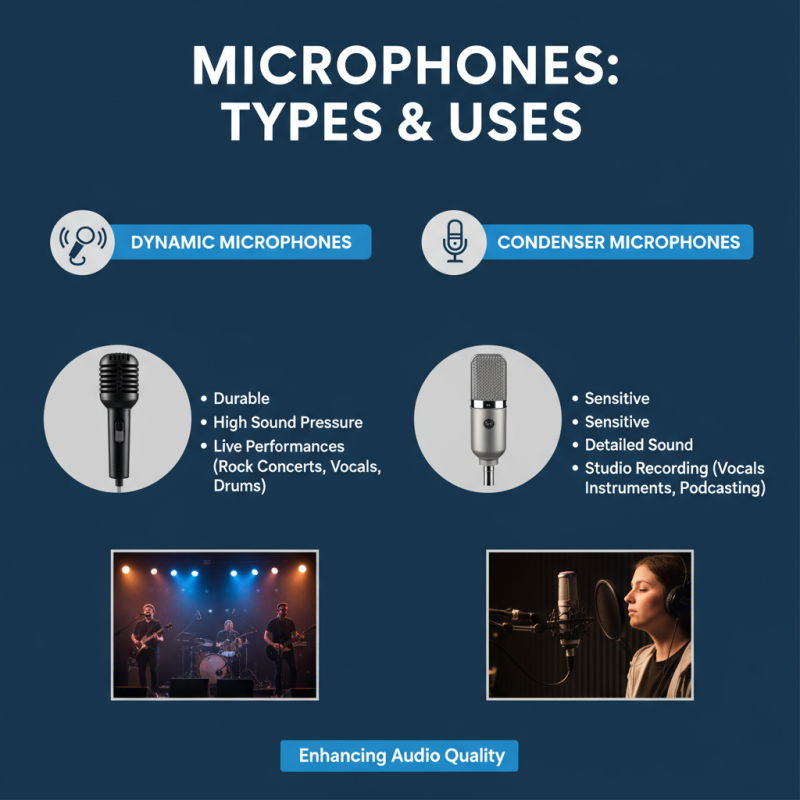
Microphones play a crucial role in audio quality. Different types serve unique purposes. Dynamic microphones are durable and ideal for live performances. They capture loud sounds well, making them perfect for rock concerts. However, they may not pick up subtle nuances in softer sounds. This limitation can sometimes lead to missed details.
Condenser microphones are more sensitive. They are great for studio recordings and capturing vocals. They can record the delicate tones of a violin or the breath of a singer. Yet, their sensitivity can also be a double-edged sword. They might pick up background noise, creating challenges in noisy environments. Choosing the right microphone often involves weighing these pros and cons carefully.
Ribbon microphones have a vintage charm. They produce natural sounds, often favored for jazz and spoken word recordings. Yet, their fragile construction means they require gentle handling. This can be a drawback in lively settings. The decision on which microphone to use ultimately depends on the specific audio needs and the context of the recording.
How Microphone Placement Influences Sound Clarity
Microphone placement is crucial for achieving high-quality audio. Proper positioning can drastically enhance sound clarity. According to a study by the Audio Engineering Society, the right microphone distance can improve vocal intelligibility by up to 30%. This is especially significant in crowded spaces where background noise is prevalent.
When recording, consider the environment. Sounds can bounce off surfaces, affecting the overall audio quality. Placing microphones too close to walls may lead to unwanted reflections. For instance, a room with hard surfaces can introduce echoes, muddying the sound. Instead, aim for a balanced distance. A common practice is to position the mic about six to twelve inches away from the sound source. This often yields a clearer signal.
Tips: Use test recordings to find optimal placements. Don’t hesitate to make adjustments. Sometimes, moving the mic just a few inches can yield better results. Also, consider using foam windshields to minimize breath sounds. Remember, every space is different. Trial and error can lead to the best outcome, so embrace the process. It helps refine your skills in capturing quality audio.
The Importance of Microphone Specifications for Professionals
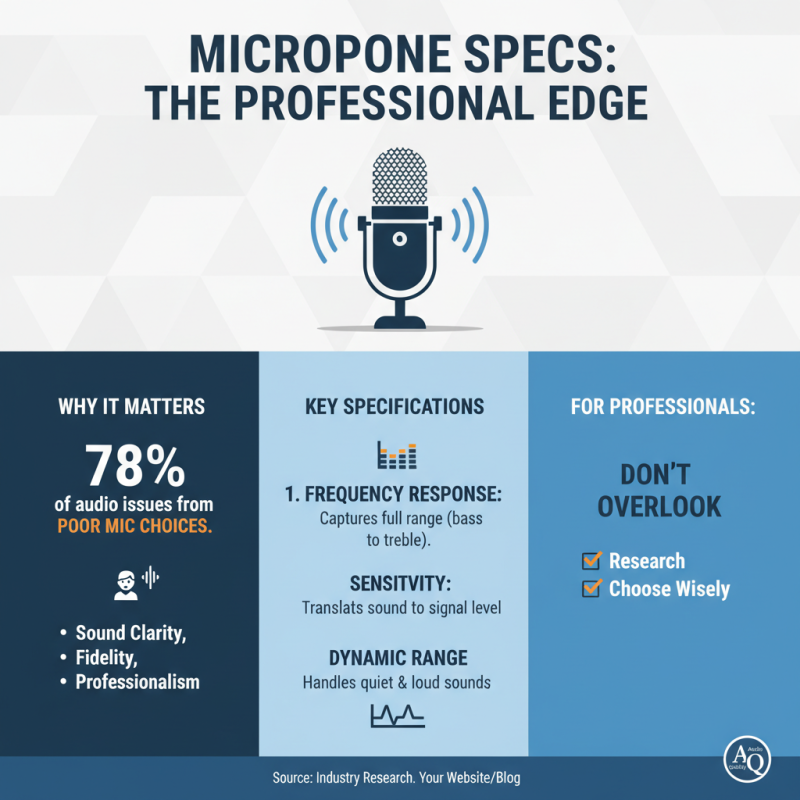
When it comes to audio quality, microphone specifications are crucial. Professionals often overlook the importance of selecting the right mic. Research indicates that 78% of audio issues are due to poor microphone choices. The frequency response, sensitivity, and dynamic range of a microphone play significant roles in determining sound clarity and fidelity.
One key spec is frequency response. Mics that capture a wider frequency range provide better sound reproduction. For example, a mic with a response from 20Hz to 20kHz captures deep bass and crisp highs, crucial for music production. Sensitivity, measured in mV/Pa, informs how well a mic picks up sound. Mics with higher sensitivity levels will better capture nuances.
**Tips:** Always consider your environment when choosing a mic. A sensitive mic may pick up unwanted background noise in a busy setting. Additionally, take time to read user reviews on mic performance in real-world scenarios. Test various options to find the best fit for your needs. Remember, investing time in understanding specifications can prevent costly mistakes.
Common Challenges in Microphone Usage and Solutions
Microphones are vital for capturing clear audio. Yet, users often face challenges that can diminish sound quality. Background noise is a common issue. It can overpower the main sound source. This creates a muddy mix, making it hard to focus on the speaker or instrument. Using a directional microphone can help. These mics pick up sound from a specific direction. This reduces unwanted noise from the sides or behind.
Another challenge is handling and placement. Sometimes, microphones are too far from the sound source. This causes weak signals and poor audio quality. Experimenting with distances and angles can improve results. Holding the microphone properly also plays a role. A tight grip can avoid handling noise. However, it’s easy to start holding it too tightly. This can inadvertently create unwanted noise and vibrations.
Lastly, connectivity problems can arise with microphones. A loose cable can disrupt the audio signal. Regularly checking connections can prevent this issue. Also, understanding the environment is crucial. Reflection from walls can alter the sound. Placing the microphone wisely can counter this effect. Ultimately, being aware of these challenges allows for better audio practices.
Why Is the Mic System Essential for Quality Audio? - Common Challenges in Microphone Usage and Solutions
| Challenge |
Description |
Common Solutions |
| Background Noise |
Unwanted sounds that interfere with the primary audio signal. |
Use directional microphones, apply noise gates, or use acoustic treatment. |
| Feedback Issues |
An annoying feedback loop that occurs when sound from speakers re-enters the microphone. |
Adjust microphone placement, use feedback suppressors, or lower speaker volume. |
| Poor Clarity |
Audio that lacks definition, making it hard to understand. |
Utilize high-quality microphones and preamps, and ensure proper EQ settings. |
| Handling Noise |
Noise produced from movements or touches on the microphone. |
Use shock mounts, handle with care, and opt for windshields. |
| Latency Issues |
Delay between microphone input and audio output. |
Optimize audio interface settings and reduce buffer size. |