How to Choose the Best Classroom Microphone System from China?

Choosing the best classroom microphone system from China requires more than comparing prices and product photos. A reliable decision begins with the classroom itself. Measure its size, ceiling height, wall materials, and seating layout. A system that works in a small training room may struggle in a long lecture hall. Listen for echo near the back row. That detail matters.

Pat Brown, founder of SynAudCon and an experienced audio educator, has emphasized a valuable principle: “The room is part of the sound system.” His statement remains highly relevant when evaluating a classroom microphone system. Good microphones cannot fully correct severe reverberation, poor loudspeaker placement, or weak installation planning. Sometimes, a cheaper package creates more work later.

Look for stable wireless transmission, clear voice pickup, comfortable teacher microphones, and simple controls. Check whether the supplier can provide frequency information, test reports, user manuals, and after-sales support. Ask for a live demonstration with a speaker standing two meters from the microphone. Do not rely only on a polished factory video. It may show ideal conditions.

China offers many capable manufacturers, but quality varies between factories and batches. Verify production experience, component consistency, customization ability, and communication speed. Request samples before placing a larger order. Test the system during group discussion, video lessons, and student questions. These situations expose weaknesses quickly.

No checklist is perfect. That is the uncomfortable part. A system may sound excellent during a short demo yet disappoint after installation. Careful testing, documented requirements, and honest supplier communication can reduce that risk. The best choice is not always the lowest-priced classroom microphone system. It is the one that remains clear, dependable, and practical every school day.
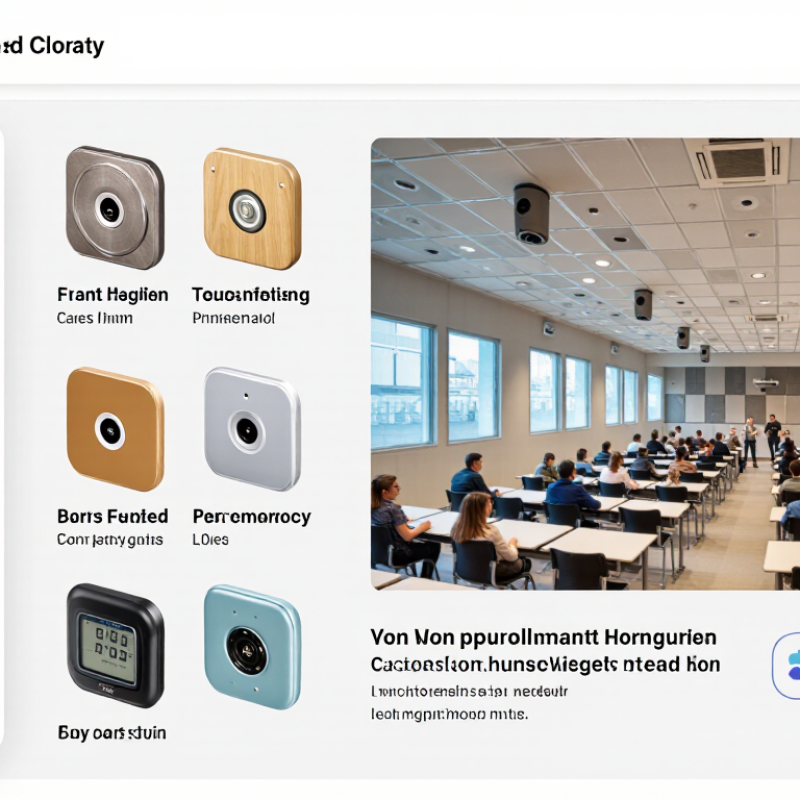
How to Choose the Best Classroom Microphone System from China?

Define Classroom Microphone Needs and Teaching Conditions

How to Choose the Best Classroom Microphone System from China?

Define Classroom Microphone Needs and Teaching Conditions

A classroom microphone should match the room, not just the product catalogue. Measure the teaching area, ceiling height, student seating, and background noise. A small language room may need one wearable microphone and a compact speaker. A large lecture room may require multiple microphones, distributed speakers, and stronger feedback control. Listen during real lessons. Air conditioners and projector fans can change the result.

Teacher movement also matters. If the teacher writes on a board, turns toward students, and walks between desks, a fixed microphone may be inconvenient. A lightweight headset can keep the voice level stable. For group discussion, handheld or tabletop microphones may be more suitable. Student participation should be considered early. Otherwise, the system may serve only the teacher.

My early mistake was choosing equipment by coverage numbers alone. The room sounded loud, but speech became tiring after twenty minutes. This showed me that clarity matters more than volume. Ask Chinese suppliers for frequency-response data, battery duration, feedback tests, and recordings from similar rooms. Request samples before placing a large order. Check charging methods, replacement parts, warranty terms, and installation support. Do not ignore local electrical and wireless requirements. A cheaper system can become expensive when compatibility is overlooked. Teach in the room before making the final decision.
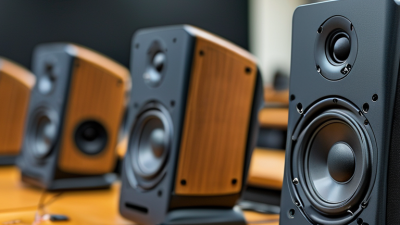
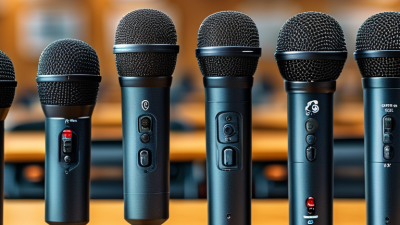
Compare Wireless, Wired, and Hybrid Microphone Systems

How to Choose the Best Classroom Microphone System from China

In real classrooms, microphone choice depends on room size, teaching style, and daily maintenance. Wired systems usually deliver stable audio with minimal interference. They suit fixed teacher desks, lecture halls, and rooms with frequent use. However, cables can cross walking areas and restrict movement. Wireless systems give teachers freedom to move between desks, boards, and activity zones. They need battery checks and careful frequency planning. A quiet classroom can become surprisingly noisy when several wireless units operate together.

Hybrid systems combine both options. A teacher may use a wireless lapel microphone while students share wired microphones at discussion tables. This arrangement can reduce battery dependence and improve installation flexibility. My first assumption was that wireless always felt more professional. It was not completely true. In one trial, a simple wired microphone produced clearer speech near a projector and several wireless devices. Testing matters more than appearance.

Tips: Ask the supplier for room-size recommendations, frequency details, battery information, and audio samples. Request a real-time demonstration with your classroom layout. Check connector types, receiver range, spare parts, and warranty support. Measure background noise near projectors and air conditioners. Leave room for imperfect results. A system that sounds excellent in a showroom may perform differently beside thirty desks, moving chairs, and active students.

How to Choose the Best Classroom Microphone System from China? - Compare Wireless, Wired, and Hybrid Microphone Systems

Typical specifications and buying considerations for classroom installations. Actual performance depends on room size, system design, local regulations, and installation quality.
Evaluation Dimension Wireless Microphone System Wired Microphone System Hybrid Microphone System Recommended Buying Check
Typical classroom use Teacher movement, active learning, presentations, and multi-purpose rooms Fixed lecterns, conference tables, lecture desks, and permanent teaching positions A fixed instructor microphone plus one or more mobile microphones Match the microphone layout to teaching activities and room flexibility
Mobility High; commonly supports bodypack, headset, or handheld operation Low; cable length and routing limit movement High for mobile users while fixed users retain stable connections Check walking paths, cable protection, and microphone wearing comfort
Typical operating range About 30–100 m line-of-sight for many professional systems; walls reduce range Usually limited by the installed cable length rather than radio range Wireless range applies to mobile units; wired units depend on cable installation Request a tested range inside the actual classroom, not only an open-area figure
Frequency and interference May use UHF, digital bands, or other locally approved spectrum; interference is possible Not affected by wireless RF interference, although grounding and cable noise still matter Requires coordination between wired audio paths and wireless frequencies Confirm legal frequency bands, channel spacing, regional approvals, and coexistence testing
Power requirement Rechargeable or replaceable batteries; operating time commonly ranges from approximately 6–12 hours Normally powered through the audio system, mixer, or phantom-power-compatible input Battery management is needed for wireless units; fixed units generally need no battery Verify battery type, charging time, replacement availability, and standby behavior
Audio quality Modern digital systems can provide clear speech; quality depends on codec, RF design, and microphone capsule Consistent, low-latency audio with no wireless transmission compression or RF dropouts Can combine stable wired sound with flexible wireless speech pickup Compare speech intelligibility, frequency response, latency, and noise performance using samples
Latency Digital models may add several milliseconds; exact latency varies by transmission design Very low and generally negligible for normal classroom speech Different signal paths may have different delays if not configured correctly Ask for measured end-to-end latency and confirm synchronization with video systems
Installation complexity Fast physical installation, but RF planning and channel setup are important More cable routing and termination work, but fewer RF configuration tasks Highest design complexity because both signal types must be integrated Request wiring diagrams, configuration files, installation guidance, and remote support
Maintenance Battery replacement, charging, pairing, firmware updates, and RF troubleshooting Mainly cable, connector, microphone, and mixer maintenance Requires both wireless maintenance and wired-cable inspection Evaluate spare parts, repair turnaround, firmware policy, and technical documentation
Reliability in daily teaching Strong when frequency coordination, battery control, and RF coverage are properly managed Generally predictable because it has fewer wireless failure points High potential reliability with a wired fallback for critical teaching positions Ask for long-duration tests, recovery behavior after signal loss, and backup procedures
Approximate total cost factors Higher equipment cost may be offset by lower cabling and installation work; batteries and chargers add lifecycle cost Often economical for fixed rooms, but professional cabling and installation can increase initial cost Usually the highest initial system cost because it combines equipment and integration requirements Compare equipment, shipping, duties, installation, training, spare parts, and five-year operating costs
Scalability Scales well if the receiver supports additional channels and the spectrum plan allows expansion Scales predictably through additional inputs, cables, and audio distribution equipment Scales flexibly but requires careful input, routing, and frequency planning Confirm maximum channels, expandable inputs, network control, and future room layouts
Best choice when The teacher moves frequently and the room must remain free of microphone cables The user stays in a fixed position and maximum simplicity and predictable audio are priorities The classroom needs mobility but also requires a dependable fixed microphone or backup path Choose based on room acoustics, teaching style, local spectrum rules, and lifecycle budget
China sourcing checklist: Confirm product compliance for the destination market, input and power compatibility, sample testing, packaging protection, warranty terms, spare-part availability, user manuals, inspection requirements, and delivery responsibilities before placing a bulk order.

Evaluate Sound Quality, Coverage, and Interference Control

How to Choose the Best Classroom Microphone System from China?

Sound quality begins with speech clarity, not impressive maximum volume. ANSI/ASA S12.60-2010 recommends classroom background noise below 35 dBA and reverberation around 0.6 seconds. These limits are demanding. In a busy room, test whether pupils can hear final consonants, quiet questions, and teacher movement. ASHA guidance commonly targets a speech-to-noise ratio of at least 15 dB for students needing listening support. Ask Chinese suppliers for measured frequency response, total harmonic distortion, microphone sensitivity, and real classroom recordings. A clean voice should sound natural, not sharp or artificially compressed.

Coverage depends on room shape, ceiling height, and seating distance. Do not select a system from square-meter claims alone. Walk to the back corner while someone speaks softly near the board. Test it live. A distributed speaker layout may reduce loudness differences between front and rear desks. The World Health Organization’s World Report on Hearing (2021) estimates that over 1.5 billion people live with some degree of hearing loss, making consistent speech delivery more than a comfort feature.

Interference control requires practical evidence. Request frequency-planning details, automatic channel coordination results, and performance tests with Wi-Fi devices operating nearby. Check whether the receiver recovers quickly after a blocked signal. Ask for compliance documents for the destination market, not generic factory certificates. I would not trust a glossy specification sheet alone. My own assumption might fail in a room with metal cabinets, projectors, and crowded wireless networks. A short on-site trial often reveals more than a long laboratory table.

Check Compatibility, Durability, Safety, and Ease of Installation

How to Choose the Best Classroom Microphone System from China?

Compatibility should be checked before price. Confirm the microphone’s connector, wireless frequency, receiver output, and power requirements. It should work with your amplifier, classroom computer, or existing speaker system. Ask for a complete connection diagram and test the system with your actual equipment. A sample test is more reliable than a sales description.

Keep it practical.

Durability matters in busy classrooms. Inspect the housing, buttons, charging port, and receiver antenna for weak points. Ask about drop testing, battery cycle testing, humidity resistance, and replacement parts. I once saw a well-performing microphone fail because its charging socket loosened after months of daily use. That small detail was missed during selection. Request production samples and check them after repeated handling, not just on the first day.

Safety documents should be clear and traceable. Request test reports for electrical safety, radio performance, battery protection, and material quality. Verify that the documents match the exact model and production version. Installation should not require specialist tools. A good system includes labeled cables, simple pairing steps, mounting guidance, and accessible controls. Ask the supplier to provide a short installation video and a written troubleshooting guide. Still, manuals can be incomplete. Have a technician review the setup, especially when several microphones share one room. This extra check can reveal interference, feedback, or poor receiver placement before teachers depend on the system.

Assess Chinese Suppliers, Certifications, Pricing, and After-Sales Support

Choosing a classroom microphone system from China requires more than comparing catalog prices. Supplier verification should begin with factory audits, production records, and recent education installations. Request serial-number traceability, test samples, and a video call from the assembly line. Public supplier quotations often range from 80 to 350 US dollars per channel, depending on wireless bands, charging docks, and automatic gain control. Treat unusually low prices carefully. They may exclude batteries, freight, software, or replacement units.

Certification details deserve close inspection. Ask for test reports from an ISO/IEC 17025-accredited laboratory, not only a printed compliance logo. Depending on the destination, check CE and RoHS documentation, FCC requirements, UKCA rules, or Chinese SRRC approval for radio equipment. The UNESCO Global Education Monitoring Report 2023 states that internet access reaches only 40% of primary schools, 50% of lower-secondary schools, and 65% of upper-secondary schools worldwide. A microphone should therefore work reliably without cloud dependence. Simple local pairing can be valuable in schools with weak networks.

After-sales support is often the weakest area. Require a written response time, spare-microphone policy, firmware procedure, and battery replacement terms. A practical trial should test thirty minutes of movement, projector noise, and speech from the back row. Measure feedback, voice clarity, and charging temperature. Ask for a three-year total-cost estimate, not just the purchase price. I would also record every failure during the pilot. Small failures matter. Supplier promises can sound convincing, yet incomplete manuals and slow replies may only appear after installation.