Choosing the best speaker ceiling system is less about buying the largest driver and more about matching sound to the room. A kitchen needs clear dialogue over running water. A living room may need even coverage across a sofa, not one loud spot beneath a grille. Loudspeaker researcher Dr. Floyd Toole is often associated with this useful principle: “The loudspeaker is the most important component in the audio chain.” Treat it as a reminder to listen carefully, not as a substitute for checking specifications.
This guide will help you compare speaker types, driver sizes, power handling, sensitivity, and installation requirements. You will also learn how ceiling height, room shape, insulation, and furniture can change what you hear. A pair of compact speakers may suit a small office, while a larger open-plan room may need several speakers placed for balanced coverage. Check whether the speakers are suitable for the room’s conditions, and confirm that your amplifier can drive them safely. Details matter.
Some choices remain personal. A bright, crisp sound can impress in a quick demo but feel tiring during a long evening. I have seen room plans look neat on paper and still leave a quiet corner. No checklist catches everything. Use measurements as a guide, compare real listening impressions, and leave room to reconsider. The best choice should sound clear at ordinary volume, fit the space, and make installation practical. That is a useful starting point—not a promise of perfect sound.
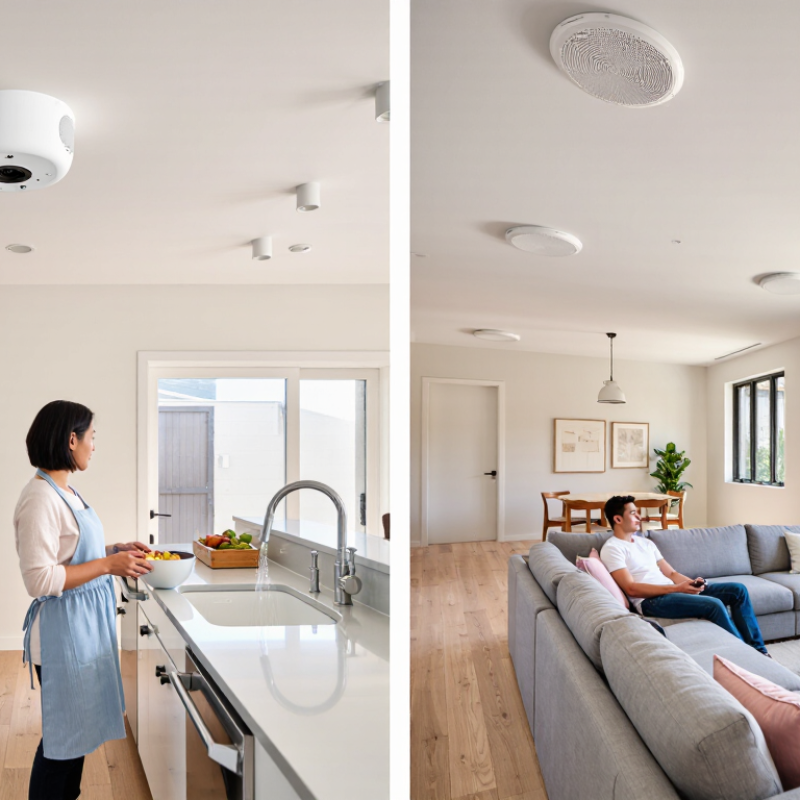
Start by deciding what you want the ceiling speakers to do. For background music during dinner, even coverage matters more than strong bass from one spot. For focused listening, a stereo pair aimed toward your usual seat may sound more natural. For television or films, consider how ceiling speakers will work with your other speakers; overhead sound alone may not provide clear dialogue. Keep it simple. Write down the room’s main use, the number of listeners, and where people usually sit.
Measure the room and note ceiling height, joist locations, and any insulation or pipes above the ceiling. These details affect speaker placement and installation, not just appearance. In a long room, several speakers at moderate volume may cover the space more evenly than two loud ones. Check that your amplifier can handle the speakers’ impedance and total load, and confirm that the chosen setup suits the room’s conditions, especially in a humid area. A sketch with seating and speaker positions can expose awkward gaps. It is easy to overplan this; real rooms rarely behave like diagrams. Leave room to adjust after listening.
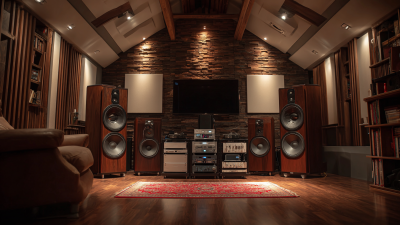
Room size is a useful starting point, but ceiling height and shape matter just as much. In a small bedroom, one well-placed speaker may provide more even coverage than several crowded near the walls. Larger rooms often need multiple speakers, spaced to reach seating areas without creating obvious loud and quiet spots. A tape measure helps. Mark the listening positions and speaker locations on a simple room sketch before choosing a layout.
Listen for the room’s acoustic character, too. Bare floors, glass, and painted walls can make sound feel sharp or echoey; rugs and curtains may soften reflections. Kitchens with cabinets and hard counters can be especially lively. Ceiling construction matters as well: joists, recessed lights, vents, and insulation can limit placement or installation depth. Check these details before cutting any openings. I would not assume that symmetrical placement always sounds best; furniture and room shape can shift the practical listening area. A careful test with temporary speaker positions, when possible, may reveal problems that a floor plan misses. Measurements are helpful, but real rooms rarely behave perfectly.
Estimated floor coverage diameter for a down-facing speaker with a 60° coverage angle. The values are calculated geometrically using ceiling height; actual coverage varies by speaker, placement, and room acoustics.
Planning tip: Use the estimated diameter as a starting point for speaker spacing, then account for listening positions, overlapping coverage, room layout, and sound-absorbing surfaces.
How to Choose the Best Ceiling Speakers for Your Needs?
Ceiling speakers come in coaxial and component designs. Coaxial models place the tweeter and woofer together, making them practical for even coverage in kitchens or hallways. Component designs separate these drivers, which can offer more control over sound direction. They may also need careful placement. A basic room test helps: play familiar music and listen from several spots. Listen closely. A speaker that sounds clear beneath it may feel thin across the room.
Check continuous power handling alongside your amplifier’s output, rather than choosing by peak-watt figures alone. A mismatch can limit volume or strain equipment. For everyday listening, clean output matters more than a large number on a box. Room size, ceiling height, and open-plan layouts all affect how much power feels sufficient. The estimate is not perfect; furniture and soft furnishings change what you hear.
Sensitivity, usually listed in decibels at one watt and one metre, indicates how efficiently a speaker turns power into sound. Higher sensitivity can help in a large room, but it does not guarantee better sound. Compare voices, cymbals, and bass at a comfortable volume. Listen for harsh treble or muddy speech. Also consider the ceiling cavity: a shallow space may restrict speaker depth and bass response. A little compromise is normal. Choose the model that sounds balanced in your room, not just impressive in a showroom.
| Speaker Type | Typical Configuration | Typical Power Handling | Typical Sensitivity | Sound Characteristics | Best Suited For |
|---|---|---|---|---|---|
| Coaxial full-range | Woofer and tweeter mounted together; usually one speaker per channel | About 20–100 W RMS per speaker | About 85–91 dB SPL at 1 W/1 m | Balanced, general-purpose sound with clear vocals and broad coverage when positioned well | Everyday music, television audio, kitchens, bedrooms, and distributed audio systems |
| Angled or directional | Angled driver assembly or pivoting tweeter aimed toward the listening area | About 20–100 W RMS per speaker | About 85–92 dB SPL at 1 W/1 m | More focused high-frequency detail and a stronger direct sound for listeners away from the speaker’s centerline | Rooms where speakers cannot be installed directly above the main listening position |
| Stereo-input, single-speaker | One speaker with separate left- and right-channel tweeters, typically serving both channels | About 20–80 W RMS per speaker; check whether the rating is per channel or combined | About 85–90 dB SPL at 1 W/1 m | Convenient stereo playback from one location, though stereo separation is limited compared with two speakers | Small rooms, hallways, bathrooms, or locations where only one speaker can be fitted |
| Moisture-resistant model | Full-range design with materials and construction intended for damp environments | About 20–100 W RMS per speaker | About 84–91 dB SPL at 1 W/1 m | Sound varies by model; protective materials do not automatically mean stronger bass or higher output | Bathrooms, covered patios, and other areas where humidity or occasional moisture is a concern |
| In-ceiling subwoofer | Dedicated low-frequency driver, normally used with separate full-range speakers and an amplifier | About 50–200 W RMS, depending on driver and installation | Often about 84–90 dB SPL at 1 W/1 m; bass measurements depend strongly on the test method and enclosure | Adds deep bass and impact; does not reproduce the full audible range on its own | Systems needing more low-frequency output for music or home theater |
Comparison note: Figures are typical approximate ranges, not guaranteed specifications. Power handling is not the same as recommended amplifier output. Sensitivity figures are most comparable when measured using the same method; some specifications use 2.83 V at 1 m rather than 1 W at 1 m. Room size, ceiling height, placement, and acoustic treatment all affect perceived sound quality.
Before choosing ceiling speakers, match their impedance and power handling to the amplifier, then check the cutout diameter and mounting depth against the ceiling cavity. Measure between joists and look for pipes, wiring, insulation, and recessed lights. A speaker that fits on paper may still clash with a duct. It happens.
Placement affects coverage as much as speaker quality. Mark the main listening seats, then position speakers to cover them evenly rather than simply centering each unit in a room. Keep clear of ceiling fans and noisy air vents; both can distract from dialogue. CEDIA’s RP22 recommended practice emphasizes planning around room geometry and listener positions. A paper plan can still miss a hidden joist, so verify with a stud finder and a small inspection opening where appropriate.
Room acoustics matter, too. ANSI/ASA S12.60 sets a 35 dBA background-noise limit and a 0.6-second reverberation-time limit for certain small classroom spaces. These are not home-theater targets, but they show how noise and reflections affect speech clarity. In a hard, echoing room, consider fewer, better-placed speakers and soft furnishings. In a large or irregular room, one pair may leave quiet corners. Check the ceiling construction and required fire or acoustic rating before cutting; a neat install should not weaken the assembly.
A low sticker price can hide extra costs. Before buying, check whether installation requires an amplifier, wiring, or ceiling repairs. A speaker that fits a standard cutout may save time when a contractor is already working overhead. Measure the space carefully. A misplaced cutout is costly to fix.
Spend more where the room demands it. Kitchens and bathrooms may need moisture-resistant construction, while a large living room may benefit from wider sound coverage. Also compare sensitivity, power handling, and grille design, not just advertised wattage. A paintable grille can blend into the ceiling, but it will not improve sound. Small detail, real difference.
Long-term value includes serviceability and replacement options. Grand View Research’s 2024 Loudspeaker Market report estimates the global market reached USD 6.6 billion in 2023, with projected annual growth of 6.4% through 2030. This broad market figure does not predict ceiling-speaker performance, but it reflects ongoing demand and product development. Still, newer features are not automatically worth paying for. I would rather choose a well-matched, repairable system than chase every specification; even that choice depends on room acoustics, which buyers often underestimate. A modest system may sound harsh in a reflective room. Check return terms, installation costs, and whether matching speakers remain available before committing.